

Retirement Planning in Malaysia: Why KALSIS Is the Missing Piece for Seniors 70+
For decades, retirement planning in Malaysia has centred around building a retirement fund through savings, investments, and disciplined contributions. Yet today, a growing reality is emerging:
Many Malaysians are living longer — but not necessarily with enough to sustain those extra years.
If you are approaching or already in your 70s, the question is no longer just how to plan for retirement — it is how to sustain a comfortable retirement for potentially decades ahead.
This is where KALSIS changes the conversation.
The Traditional Retirement Plan in Malaysia
A typical retirement plan in Malaysia revolves around:
Employees Provident Fund (EPF)
PRS (Private Retirement Scheme) and other private retirement options
Investments such as unit trust, equities, and Malaysian REITs
Insurance products and life insurance policies
These tools are designed to help you:
Start saving early
Benefit from compound interest
Build a diversified portfolio across asset classes
Institutions like Securities Commission Malaysia regulate PRS funds, while providers such as Principal Malaysia and StashAway Malaysia offer accessible investment options in Malaysia.
The Problem: EPF Retirement Savings May Not Be Enough
Despite these systems, the reality is concerning.
Data from Department of Statistics Malaysia shows that average life expectancy is increasing — meaning your retirement years are getting longer.
At the same time:
Inflation erodes purchasing power
Healthcare costs continue to rise
EPF balances often fall short of the basic savings target
Even with EPF’s annual dividends, many retirees struggle to maintain their desired standard of living.
This creates a gap between:
Your total retirement savings
And what you actually need to retire comfortably in Malaysia
Why Traditional Planning Falls Short for Seniors 70+
Most financial advice focuses on:
The earlier you start, the better
Long-term compound growth
Building a savings plan over decades
But what if you are already:
In your 70s
No longer earning
Facing increasing monthly expenses
At this stage:
You cannot rely on compound interest to grow your funds
You may not have time to diversify further
Your retirement income becomes fixed — while costs keep rising
This is where traditional financial planning reaches its limits.
The Missing Asset: Your Home
Many seniors overlook their largest asset:
Their home.
For those who:
Own a fully-paid, freehold landed property
Live in the Klang Valley, Penang or Johor
Your home may hold significant untapped value — far exceeding your remaining retirement savings in Malaysia.
KALSIS: A New Approach so you have more than enough to retire on
KALSIS introduces a new dimension to your retirement plan.
Instead of relying solely on:
EPF and PRS
Investments and unit trust funds
KALSIS enables seniors aged 70+, living in a fully-paid, freehold and landed home in the Klang Valley, Penang and Johor to:
Unlock their home equity
Convert it into cash and lifetime income
Strengthen retirement without taking on debt
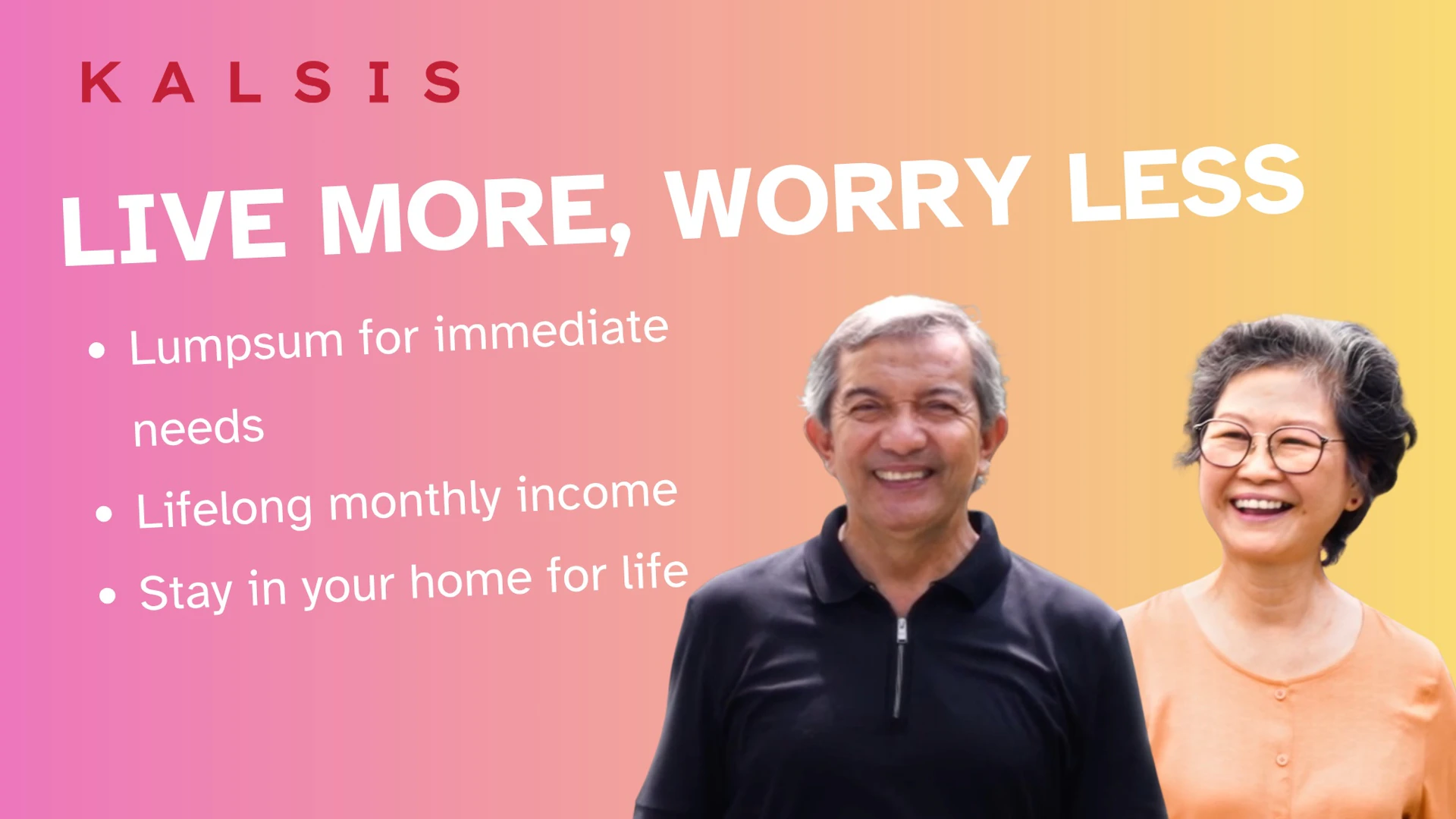
Live More, Worry Less with KALSIS
How KALSIS works to boost retirement savings:
KALSIS is not a loan.
It is an equity-based solution designed to:
Provide a lump sum upfront
Deliver ongoing retirement income
Allow you to continue living in your home
This means:
No borrowing
No interest
No repayment obligations
It complements your existing retirement fund, rather than replacing it.
Why KALSIS Matters for Longer Life Expectancy
As life expectancy increases, so does the risk of outliving your savings.
KALSIS helps address this by:
Providing a lifetime income stream
Supporting a comfortable and secure retirement
Giving you flexibility to manage rising costs
This is especially important if:
You expect to live longer
You want more cash to support your lifestyle
You want to maintain independence
Comparing Traditional Retirement Planning (EPF and PRS) vs KALSIS
Traditional Approach
Build savings through EPF and PRS
Invest in unit trust and other investment options
Rely on compound interest
Hope savings last through retirement
KALSIS Approach
Unlock existing wealth in your home
Generate immediate and ongoing income
Reduce reliance on uncertain investment returns
Support financial stability in later years
A Smarter Way to Achieve Financial Security Amidst Your Investment Options
KALSIS does not replace traditional tools — it enhances them.
You can still:
Maintain your PRS funds
Benefit from tax relief and personal tax relief
Continue managing your wealth management strategy
But now, you also:
Access additional liquidity
Reduce financial stress
Improve your ability to retire comfortably
The Reality: It’s Not Just About Saving, Wealth Management or Financial Literacy
Many seniors spend years asking:
“Have I saved enough?”
But the better question is:
“Am I using all my assets effectively?”
Your home is not just a place to live — it is a powerful financial resource.
Final Thoughts: Redefining Retirement in Malaysia
A modern retirement plan in Malaysia must evolve beyond:
EPF
PRS
Traditional investments
It must reflect:
Longer lifespans
Rising costs
Changing financial realities
KALSIS represents this evolution.
For seniors aged 70+, it provides a way to:
Unlock value
Strengthen retirement
Achieve lasting financial security
Because ultimately, retirement is not just about having enough.
It is about living well — for as long as life allows.